How Business Owners Can Build a Systematic Employee Development

Integrations mentioned in this article
When a company has 10–20 employees, the owner usually has a good understanding of what each person can do.
They know who is a strong specialist, who can be trusted with a difficult client, who is ready to become a manager, and who still needs experience. Many decisions are made simply because the owner has worked with these people for a long time and knows them well.
But the company grows.
The team reaches 50, 100, or 200 people. New managers, departments, positions, and locations appear. The owner can no longer personally know the capabilities and development needs of every employee.
And a problem emerges:
How do you understand the human capital you actually have? Who is truly strong? Where are the gaps? Who should be developed, and in what? Who is ready for the next step?
Without answers to these questions, employee development gradually turns into a collection of separate activities: someone takes a course, someone gets a mentor, someone attends a training program, and someone receives an individual development plan.
But there is no systematic management of development.
You need to start with more than training
When companies talk about employee development, they usually think about training first.
Employees need to improve sales — run a sales training program.
Customer service needs improvement — launch a customer service course.
Managers need development — send them to a leadership program.
But there is a simple question:
How do you know exactly what a particular person needs to develop?
One administrator may genuinely lack product knowledge.
Another may know everything but be unable to apply that knowledge in a real conversation with a customer.
A third may communicate extremely well but struggle with difficult situations.
And a fourth may already be ready to become a manager but lack the skills to lead a team.
That is why systematic development starts before training — with an understanding of what exactly needs to be developed in each person.
This is where the concept of competencies becomes useful.
What is a competency in simple terms?
A competency is not simply knowledge.
For example, an employee may know the rules for handling objections. But that does not necessarily mean they can actually handle objections effectively in a real conversation.
A competency can therefore be understood as the ability to act effectively in specific work situations.
For example:
“Customer communication” is too broad.
It can be broken down into observable behaviors:
- identifies the customer's needs;
- explains solutions clearly;
- answers questions;
- handles objections calmly;
- manages difficult or conflict situations constructively.
These specific observable behaviors are often called competency indicators.
And this is an important point: when we describe not abstract personal qualities but observable actions, we can actually assess and develop them.
The next question: what does “good” look like?
Suppose we have identified “Customer Communication” as an important competency for a clinic administrator.
But what does “good” mean?
For one manager, an employee communicates well if there are no customer complaints.
For another, good communication means identifying needs, explaining options, handling objections, and resolving difficult situations calmly.
That is why each competency needs a target level, together with a description of what that level looks like in practice.
For example:
Competency: Handling Difficult Situations
Level 1
Becomes uncertain during a conflict and immediately escalates the situation to a manager.
Level 2
Can maintain the conversation but does not always resolve the situation constructively.
Level 3
Independently handles typical conflict situations while maintaining constructive communication.
Level 4
Effectively resolves complex situations and helps other employees handle difficult cases.
Now we have more than a vague idea of a “good employee.” We have a clear scale.
And that allows us to move from subjective impressions to management.
This creates a competency profile for each role
For every position, we can define:
Which competencies are required → how they are demonstrated → what level is expected.
For example, a clinic manager might need:
- team management;
- decision-making;
- communication;
- conflict management;
- customer orientation;
- employee development;
- financial thinking.
This is a competency profile for the role.
When such profiles exist for the key positions in a company, the owner can finally see the organization's human capital systematically.
Not simply:
“We have good people.”
But:
“These are the competencies our company needs. This is the level we expect. This is where our employees are today. These are our main gaps.”
Only then does it make sense to talk about development.
How do you identify competency gaps?
There are several ways to do this.
Knowledge testing
360-degree feedback
Manager assessment
Competency-based interviews
The same competency profile can therefore support different stages of the employee lifecycle:
candidate → employee → development → next career step.
But assessment itself does not develop anyone
This is one of the most common mistakes.
A company can conduct an excellent 360-degree assessment, produce a detailed report, and then put it in a folder.
An employee may receive 20 pages of feedback and still have no idea what to do next.
The results of assessment therefore need to be converted into specific development actions.
For example:
The employee has an insufficient level of the “Handling Difficult Situations” competency.
The next question is:
What will actually help develop this competency?
For each competency indicator, appropriate development activities can be defined in advance:
- training;
- videos or learning materials;
- practical assignments;
- case discussions;
- mentoring;
- manager observation;
- repeated practice.
This creates a logical chain:
competency → indicator → current level → gap → development action.
This is where the Individual Development Plan comes in
An Individual Development Plan should not be a formal document that HR prepares once a year.
It can be created directly from assessment results.
If the system shows that an employee needs to develop two specific competencies, those competencies can become the foundation of their IDP.
At the same time, a manager can add specific development tasks at any point, even if they were not identified through a formal assessment.
For example:
“Conduct five difficult customer conversations independently and review the results with the manager.”
The IDP therefore combines both formal assessment results and real development needs arising from day-to-day work.
Most importantly, development does not end when the IDP is completed
Imagine this:
In January, an employee receives a level of 2 out of 4 for a particular competency.
Between February and April, they complete training, practice new behaviors, and work with a mentor.
But the most important question comes next:
Did anything actually change?
That is why the next assessment or knowledge test matters.
Before:
2 out of 4
After:
3 out of 4
Now the company can see not just whether training was completed, but whether the employee's competency actually improved.
The next development cycle can then begin:
what has improved → what gaps remain → what should happen next.
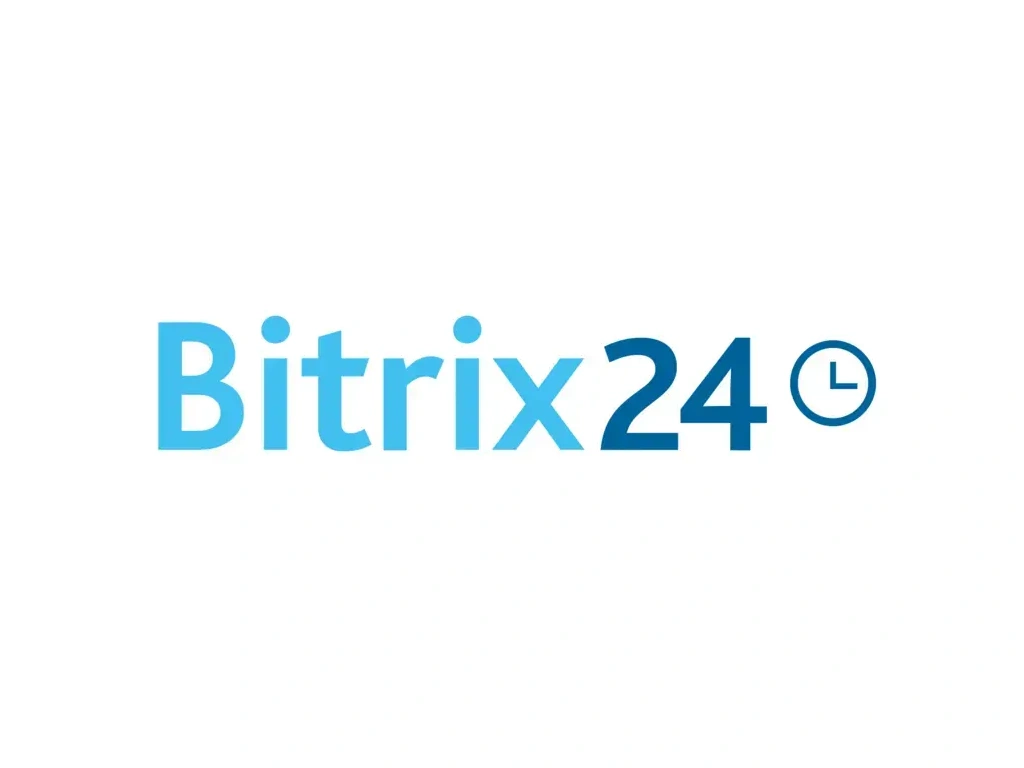
The result is a continuous development cycle
Instead of having separate HR processes, the company gets one connected system:
Recruitment
Assessment of the candidate against the competency profile.
Onboarding
Development of the knowledge and skills required for the role.
Assessment
Measurement of the employee's current competency level.
IDP
Specific development actions.
Development
Training, practice, mentoring, and other development activities.
Reassessment
Measurement of progress.
And this cycle can continue throughout the employee's journey in the company.
How can this be automated?
With a small number of employees, this process can still be managed manually.
But when a company has 100–200 employees, dozens of roles, and several management levels, manual management quickly turns into spreadsheets, documents, emails, and endless reminders.
That is why this system should work within a single digital environment.
With Brusnika.LMS, companies can connect:
- competency and role profiles;
- behavioral indicators;
- target levels;
- knowledge testing;
- 360-degree assessment;
- manager assessment;
- onboarding programs;
- individual development plans;
- development activities;
- reassessments and retesting;
- employee development history.
As a result, the system does not simply train employees. It supports the entire employee development cycle.
What does the owner actually get?
Ultimately, a business owner does not need a “competency model” for its own sake.
They need to understand:
What kind of people and capabilities does my company actually have?
Which competencies are we missing?
Who has specific gaps?
Who should we develop?
What exactly should this person do?
Who is ready for the next level of responsibility?
Did development actually produce a result?
That is where learning becomes part of a much broader management system.
Systematic employee development starts with understanding your human capital.
When a company knows which competencies it needs, what level it has today, and which actions can close the gaps, employee development stops being a collection of isolated activities.
It becomes a manageable, measurable process.
Understand → assess → develop → measure the result → develop further.